
AI Yes. AI No.
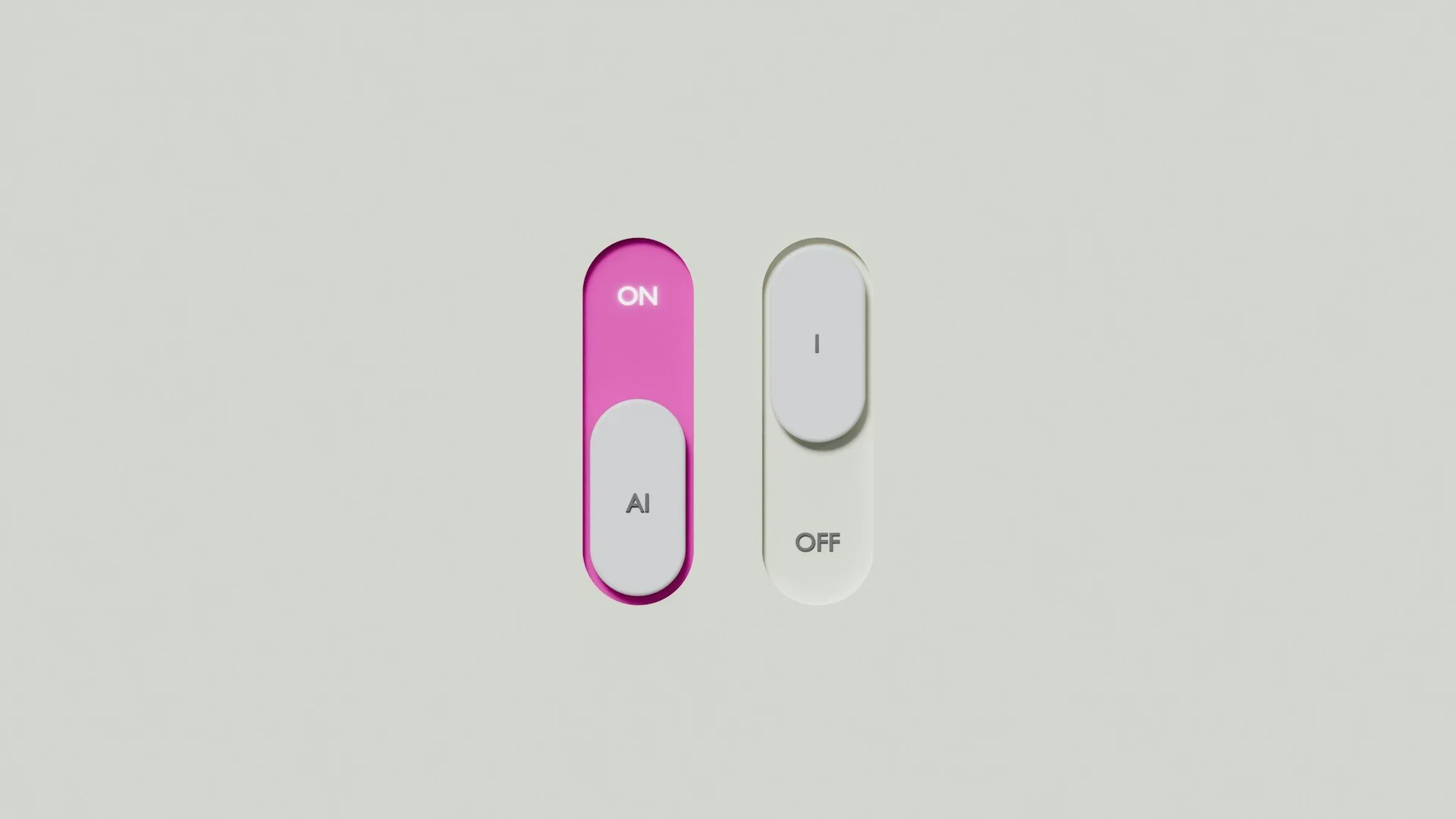
Note: this article has been hand-crafted by me and not AI-generated. But that doesn’t mean I don’t use AI to help me do my work. Allow me to explain in which circumstances I say “yes” to AI and when it’s a hard “no.”
AI Yes
I think AI is most useful as an order-taker or an assistant and I’ve incorporated it into several areas of my work routine.
Claude is my go-to for generating SEO-friendly meta data for my articles as well as writing email drafts that notify clients about my untimely passing. It’s also great for reading long articles and generating a synopsis for quick digestion.
Fathom has been my AI notetaker for meetings over the past 12 months. It allows me to give my full attention to the person I’m speaking with, knowing that I’ll have a recording of the meeting, a transcript, a synopsis, and a handy to-do list that I can share with all of the meeting participants. Pro Tip: do not send your AI notetaker to a Zoom call in place of you — it’s inconsiderate and lazy.
I use Google Gemini to generate lifestyle images for a retail client who has only product shots of their clothing. I realize this type of AI may be eating into the livelihood of my photography friends (we’ve had long conversations about the issue over beers) but a lot of clients simply don’t have the budget to hire a photographer, models, a stylist, and an art director in order to shoot hundreds of retail items within a collection.
As an image-generator, MidJourney has improved greatly in just a short amount of time. Back in 2023 it was cranking out some real nightmare fuel but, now, with a well-crafted prompt and a reference pic it can create extremely realistic and detailed images. I use MidJourney to generate editorial images for clients when stock imagery comes up short and, although I always prefer to hire human illustrators for projects, when budgets are tight MidJourney is a good alternative source.
I use Photoshop’s built-in AI tools on a daily basis. Need to stretch a 4:3 image into a website banner? Just increase the background width and tell Photoshop to fill in the rest. This feature has saved me hours of time.
Lummi is a good source for AI-generated stock images (no six-fingered people here). It doesn’t answer all of my stock imagery needs but I now spend about half my image searching time there. And it has a great feature that allows you to change the aspect ratio of an image.
Honorable Mentions: Perplexity (for deep research) and Granola (for unobtrusive note-taking during meetings).
AI No
The water’s edge of AI for me is creative thinking and the design process.
I carry a notebook and begin many of my brand development projects with hand-drawn doodles and sketches. It allows me to work quickly and discard ideas that seem great in my head but quickly turn to “meh” once I see them on paper.
I feel more connected to the creative process when it’s pen on paper rather than being separated by a keyboard and mouse. Also, I’m GenX and I grew up without computers or the internet so maybe I’m preconditioned to start in analog mode.
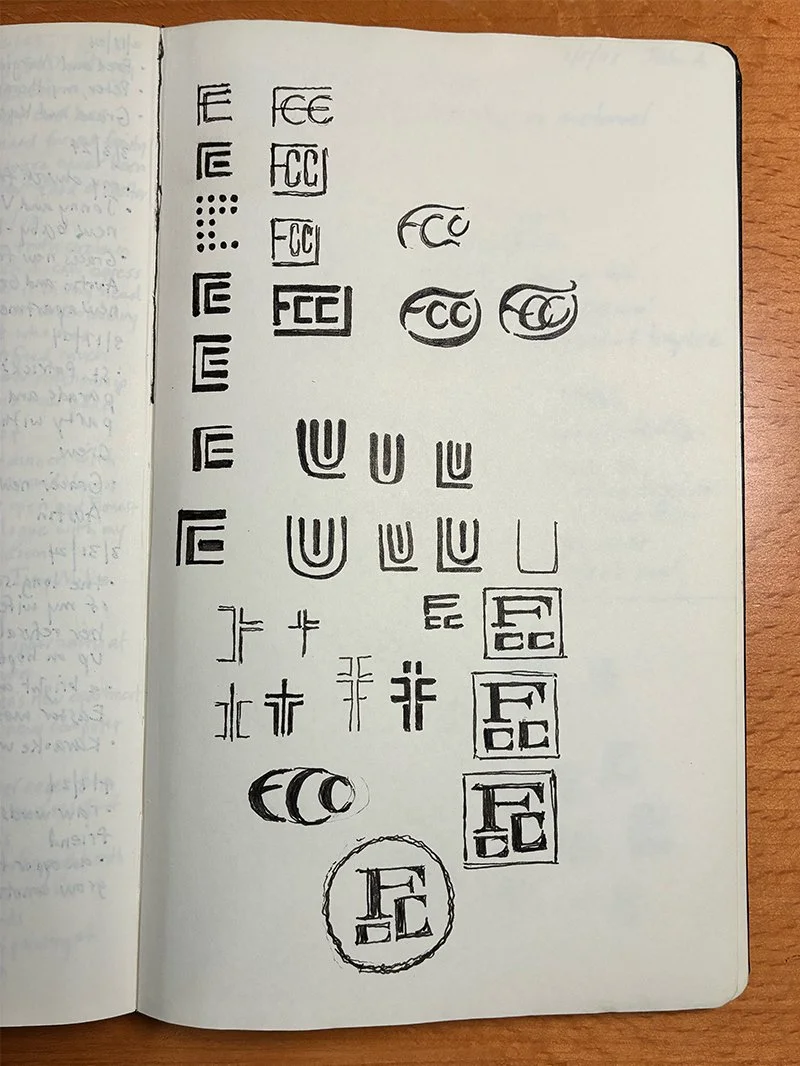
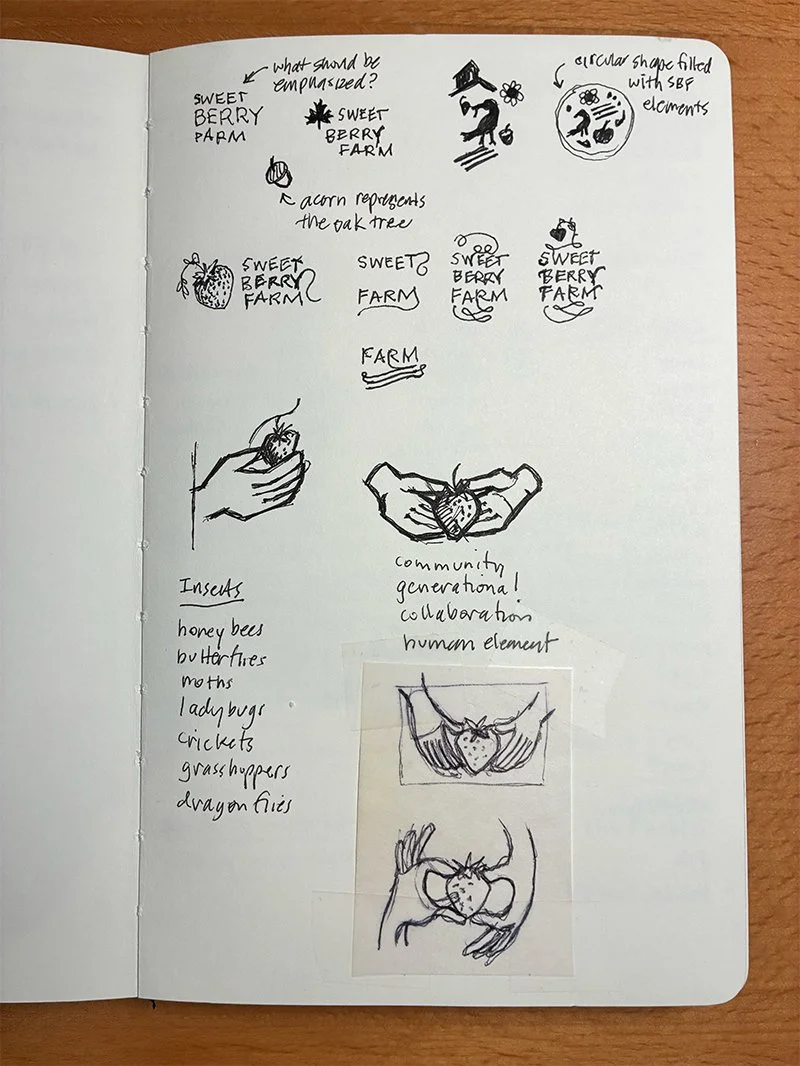
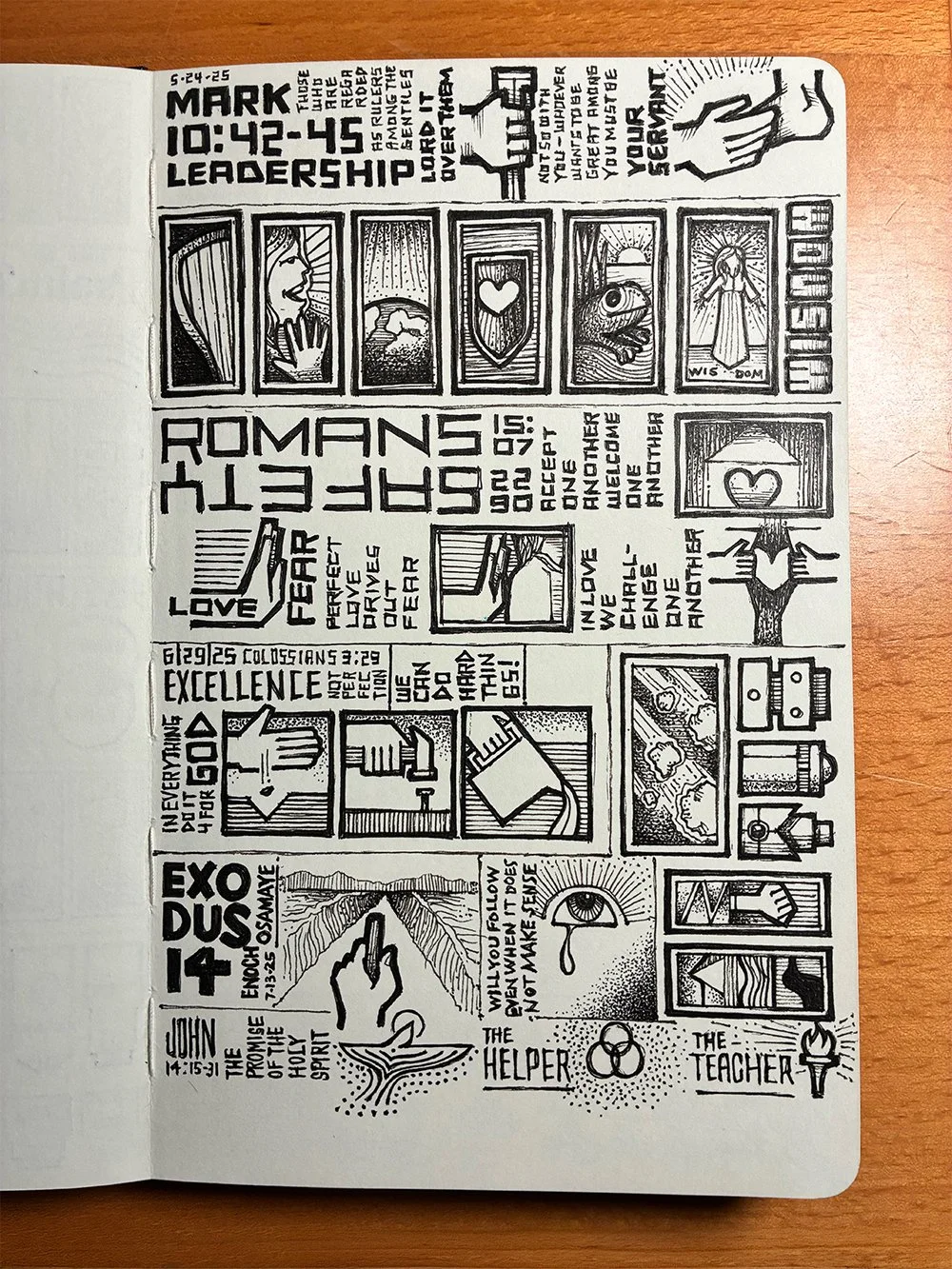
From my notebook: logo concepts for two different clients and “notes” from Sunday mornings.
I write my own articles no matter how poor my grammar may be at times. This is equally a philosophical decision and a strategic one. I prefer to write my own thoughts about branding and design — not solely to keep my brain from turning to mush due to lack of exercising it — but because my writing is uniquely me and provides a perspective that no one else has. Like this article on why modern RV design sucks or this article on how branding your business is like learning a backflip.
Why the difference is important to me
AI, at its core, is an aggregator of data. It’s not truly creative (not yet) in making non-linear connections based on personal memory and experiences and exercising asymmetrical thinking the way our human brains do.
Michael Malewicz wrote a great article on Medium about how designers innovate in visual design for the web, incorporating the emotional connection viewers make with user interfaces. This is in contrast to AI-generated web design which is programmed to shoot for the middle and rarely, if ever, innovates.
David William Silva writes on Substack, “AI and AI agents are not magic. They are not secret brains. They are layers of simple ingredients running at massive scale: math, data, repetition, compute, and a bit of organized decision-making.”
Michael and David are correct — AI is not creative. But I am and I don’t intent to subjugate my creativity to a clever aggregator of data. I want my clients to have full access to my creative abilities and benefit from the deep thinking, missteps, and happy accidents that occur during the process.
I also want my clients to have an authentic experience. I believe that humans working together in real time and physical space produce the most interesting and effective solutions.
AI that is used to emulate the creative process is not authentic, it’s imitation. And most humans innately know it when they see it.
If you’ve made this far you might be considering working with me to develop your brand and I want you to know you’ll be working with a designer who uses AI tools but the critical deep work is done 100% by me, in collaboration with you.