Closing the Distance
Thirty five years ago I was sitting in a hotel room, nervously but carefully hand-lettering a program that would be used in my wedding the next day. I had access to four pieces of hotel stationery, a ballpoint pen, and a downtown Kinko’s that was open late.
I had flown into Providence the day before with barely enough time to secure a marriage license from City Hall, rent my tuxedo, and get a fresh haircut. My bride and I planned our entire wedding remotely — me from Ohio and her from Long Island. We had finalized our plans months before by booking a string trio and a vintage limousine we found in the Yellow Pages (this was pre-web) but neither of us had thought about a program for the ceremony.
Until the night before.
Which is why I was sitting at a tiny hotel room desk hand-lettering our wedding program.
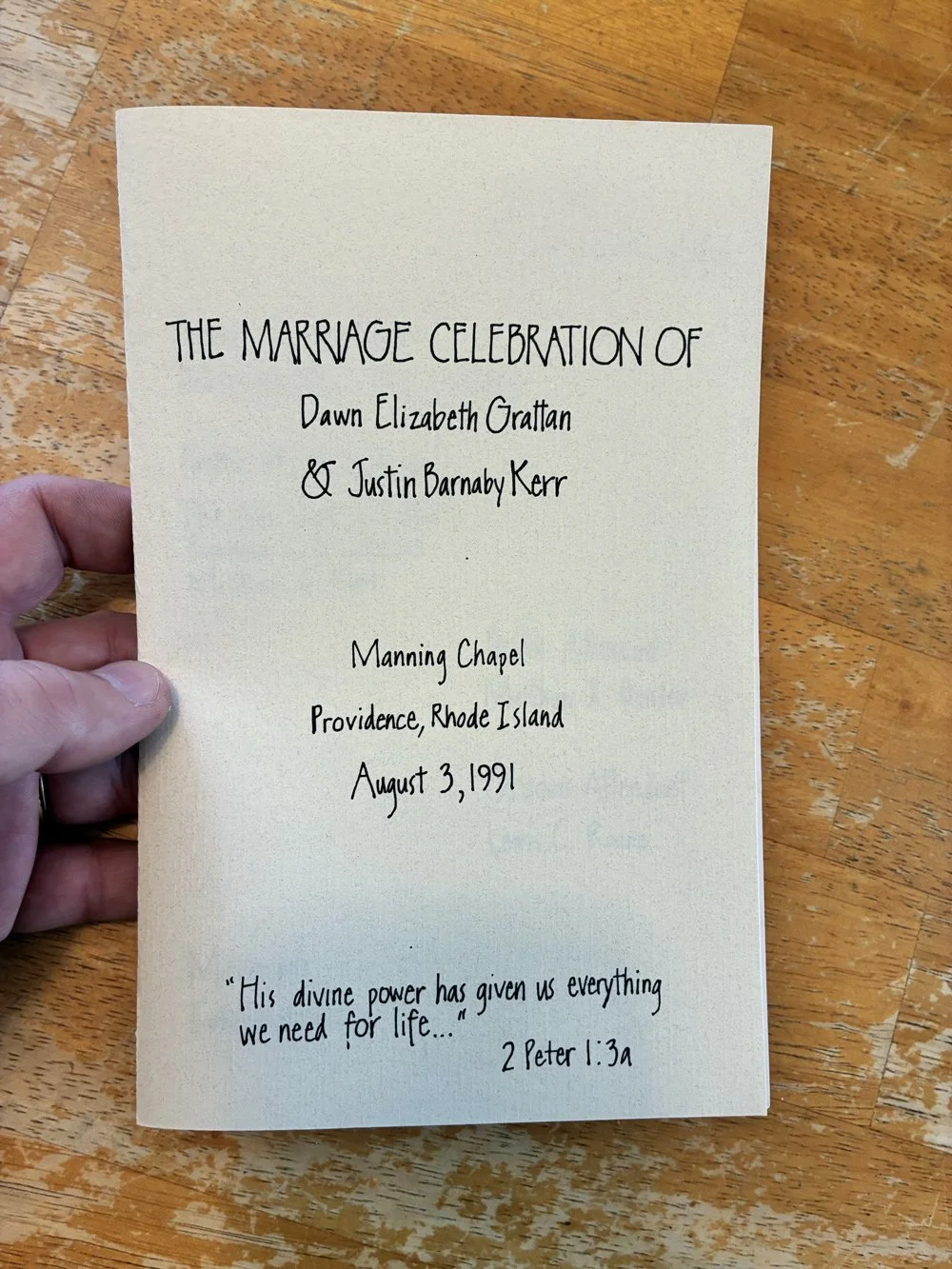
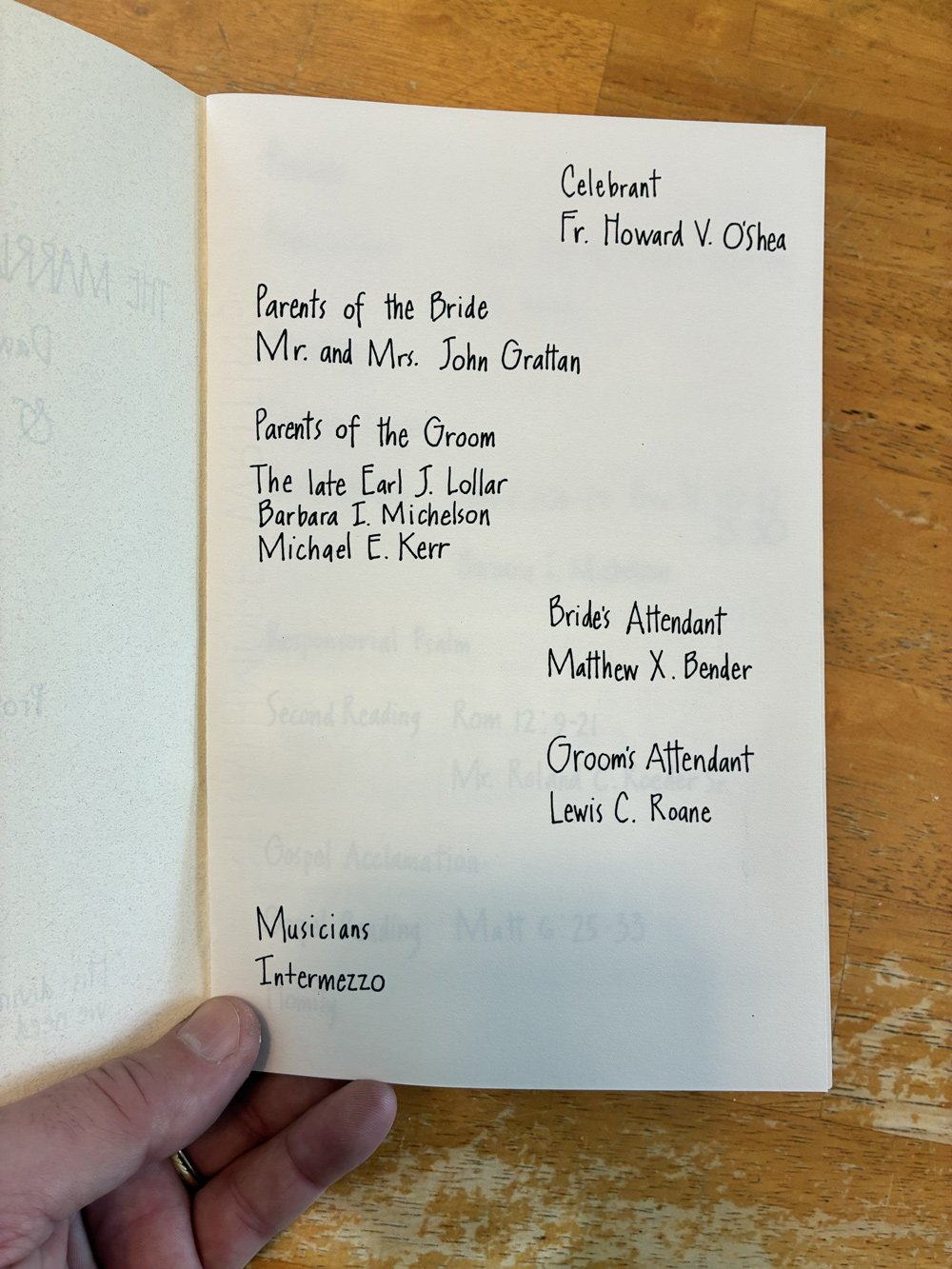
Most designers would wince at seeing a piece of work they had created decades before. Almost all of the design work I did in the nineties has (thankfully) not survived to this day. But when I recently re-discovered my wedding program I was surprised at how well the design has held up (nostalgia notwithstanding).
No doubt the tight deadline and the limited resources forced me to rely solely on my talent and not overthink the design, and the personal significance of this life event focused me in a way that a client-commissioned piece could not.
But there’s a lot to be said for hand-crafting a piece of design. I was fortunate to be a design student in the 80’s, spending hours painting swatches of gouache for color theory class and hand-lettering my name in Baskerville over and over again to learn visual letter spacing.
Yes, RISD had a computer lab when I was there but you had to book time to access one of the Macintosh SE computers and a printout from the black and white laser printer cost a dollar a page — so you had to carefully plan (and budget) your digital design.
Digital tools place a distance between the designer and design. Over the past four-plus decades of digital design we’ve come to accept this distance as normal because the marketplace demanded it. And some beautiful and powerful graphic design has been produced as a result. But with the introduction of AI design, that distance has grown considerably and some folks within the design community have begun to push back on this supposed evolutionary step.
I’ve written articles on AI and its role in the design space, which you can read here and here. But that’s not the focus of this article.
My career would not exist without having adapted to digital design all those years ago and I’m not naive enough to think AI isn’t here to stay in some form or another. But I believe there is value in staying connected as closely as possible to my work and keeping the distance between me and my tools as short as possible.
That’s the reason I begin every logo design with sketches before eventually moving over to Illustrator. Sketching is fast, loose, and allows me to see ideas that have potential and ones that should be binned before they enter the pristine world of digital.
I also love running in-person brand strategy sessions where Sharpies, Post-it Notes, and whiteboards are the main tools. These types of sessions are always fun, dynamic, and close the distance created by a Zoom call.
What’s been your relationship with digital tools? Whether you’re a designer, writer, marketer, musician, or other creative I’ve love to hear from you. You can leave your comment below or reach out to me on LinkedIn. Or, if you want to close the distance and have a conversation, email me and we can grab a coffee.